
An oil boiler can appear to be working normally while soot, worn components or changes in combustion gradually affect its performance. A professional service looks beyond whether the heating comes on, checking the condition and operation of the parts that keep your home warm.
Knowing what to expect helps you understand the engineer’s findings and keep useful maintenance records. The exact work depends on your boiler and its manufacturer’s instructions, but a thorough service should cover cleaning, inspection, safety checks and measured testing before the appliance returns to use.
1. An initial inspection and discussion about performance
A useful service starts with how the boiler has been behaving. Tell the engineer about unexpected lockouts, unusual noises, oil smells, smoke or changes in heating and hot water performance. Mention whether you have needed to reset the boiler or top up the system pressure.
The engineer should identify the appliance, review available service information and check its general condition. Depending on the installation, this includes looking for:
- Oil or water leaks and signs of corrosion.
- Damage to the casing, accessible wiring or connections.
- Obstructed ventilation or restricted access around the appliance.
- Signs of overheating, soot deposits or escaping combustion products.
Previous service records can help highlight recurring issues or changes in test readings. Keep these available, along with the boiler manual if you have it. The engineer should then isolate the relevant supplies safely before opening and working on the appliance.
2. Cleaning the boiler and inspecting the burner
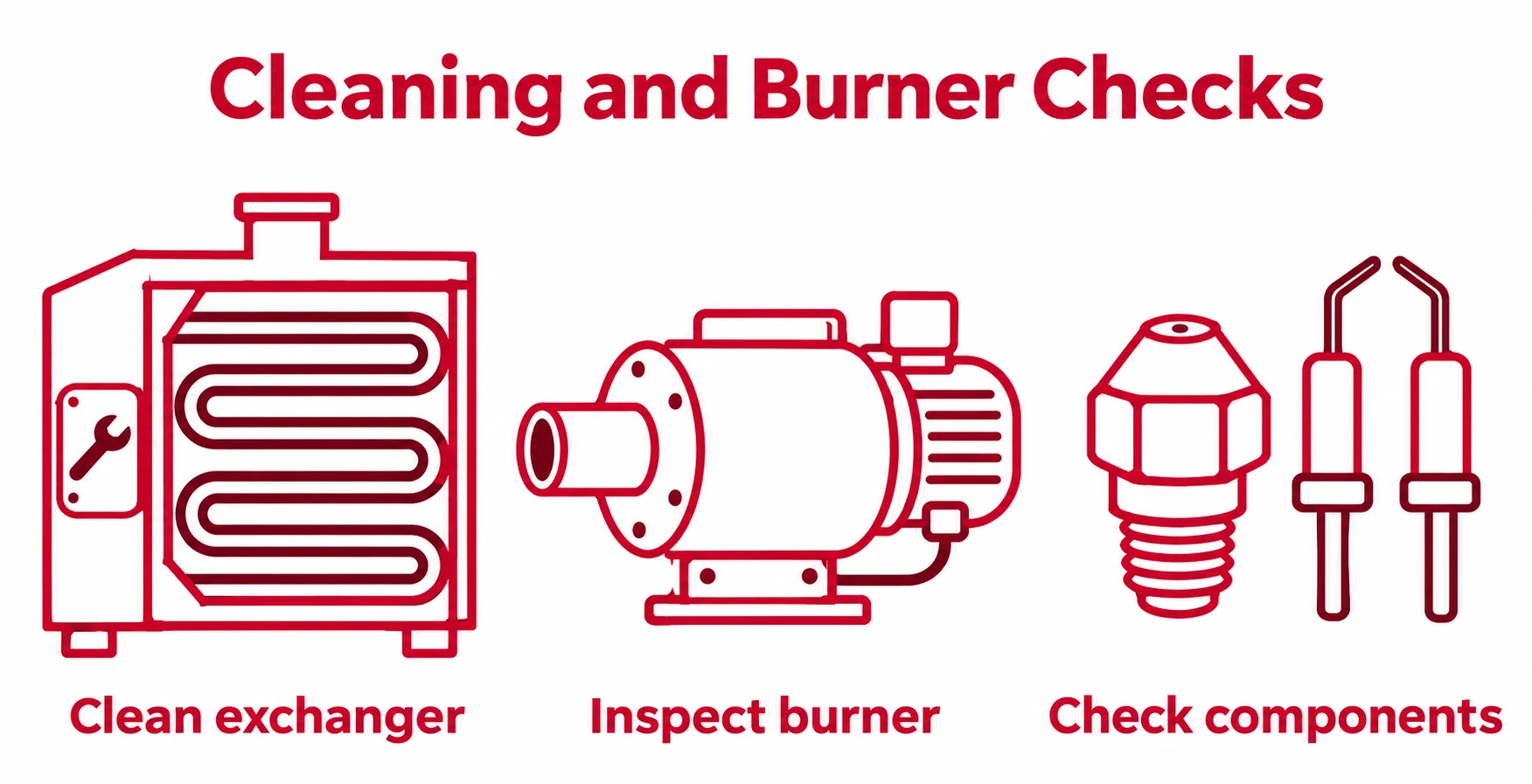
Servicing oil fired boilers normally involves accessing the combustion chamber and heat exchanger to remove deposits using suitable equipment. Soot can reduce heat transfer, so cleaning is important for maintaining performance. Heavy or unusual deposits also need investigation rather than simply being cleared away.
The engineer should inspect accessible internal surfaces, baffles, seals and any combustion chamber lining for deterioration. Components removed for cleaning need to be refitted correctly, with damaged seals or other parts addressed according to the manufacturer’s guidance.
The burner also needs attention. Checks typically cover the ignition electrodes, flame detection device, fan and accessible burner components. The nozzle should be checked and renewed where required by the service schedule, using the correct specification for the appliance.
A nozzle is not something to select by appearance alone. Its fuel delivery rate, spray angle and spray pattern must suit the boiler and burner. Accurate component selection supports clean ignition and stable combustion.
3. Checking the oil supply and visible tank condition
The boiler depends on a reliable oil supply. A service should include checks of accessible oil pipework, connections and relevant filters for leaks, deterioration or restrictions. Filter elements should be cleaned or renewed as appropriate to their design and the maintenance instructions.
Flexible oil lines need particular attention because their condition and replacement requirements can differ from those of fixed pipework. The engineer should also check the fire protection arrangements, including the fire valve and its sensor, as applicable to the installation.
A visual check of the accessible oil tank and supply route can identify concerns such as staining, damaged supports or obvious tank deterioration. This is not the same as a comprehensive tank assessment, and inaccessible or buried pipework cannot be fully assessed visually.
If contamination or water in the oil supply is suspected, further investigation may be needed. Ask the engineer to explain any concerns and whether additional tank or supply maintenance is recommended.
4. Inspecting the flue, ventilation and condensate drainage
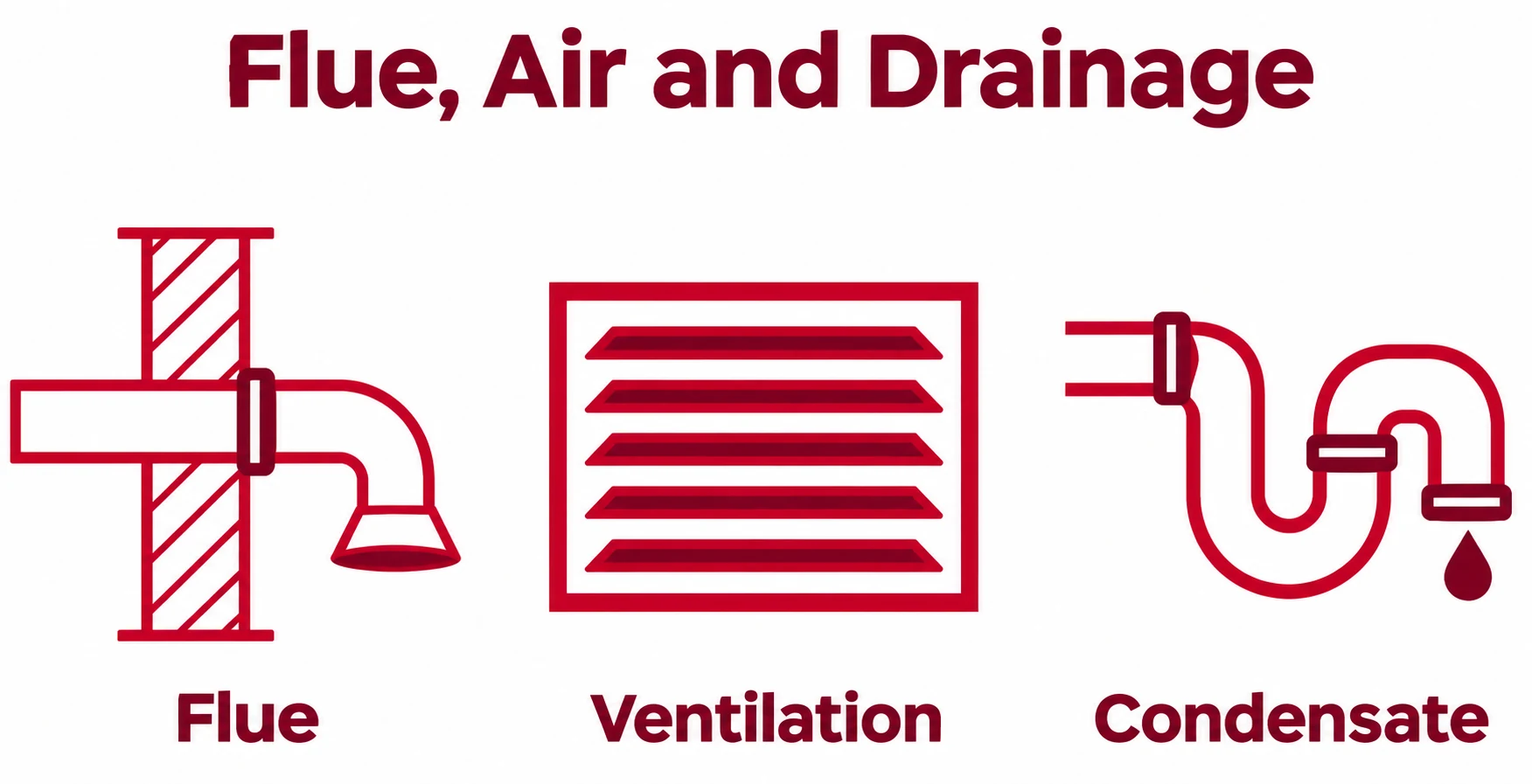
Combustion products must leave the appliance safely. The engineer should inspect accessible flue components, joints and the terminal for condition, security and signs of leakage or obstruction. The checks required depend on the flue arrangement and the boiler manufacturer’s instructions.
Where the appliance relies on permanent ventilation, those openings must remain clear. They should never be covered to reduce draughts. For appliances that draw combustion air through a dedicated air duct, the relevant air inlet also needs checking.
On a condensing oil boiler, the service should include attention to the condensate trap and accessible drainage arrangements. Cleaning or checking the trap as specified helps ensure condensate can drain correctly. Visible leaks, restrictions and vulnerable external pipework should be noted.
A carbon monoxide alarm provides an additional warning, but it does not replace appliance maintenance. If an alarm sounds or you suspect fumes, stop using the appliance, move to fresh air and seek urgent professional advice.
5. Testing combustion, controls and operation
Cleaning is only part of the job. Once the boiler is reassembled, the engineer should run it and check that it ignites, operates and shuts down correctly. Relevant safety controls should be tested using the appropriate procedures.
Combustion testing should follow the manufacturer’s requirements. This commonly includes a smoke test and measurements taken with a suitable flue gas analyser. Oil pump pressure and burner air settings should be checked and adjusted where necessary to achieve the specified operating conditions.
These settings should be based on measurements, not guesswork or flame appearance alone. Our explanation of how oil boiler burner settings affect reliability explores why correct adjustment matters.
The engineer should also check relevant boiler controls and observe heating or hot water operation as appropriate. System pressure and visible water leaks may need attention. A combustion efficiency reading is useful, but it is not a measure of the efficiency of your entire heating system.
6. Clear service records and practical recommendations
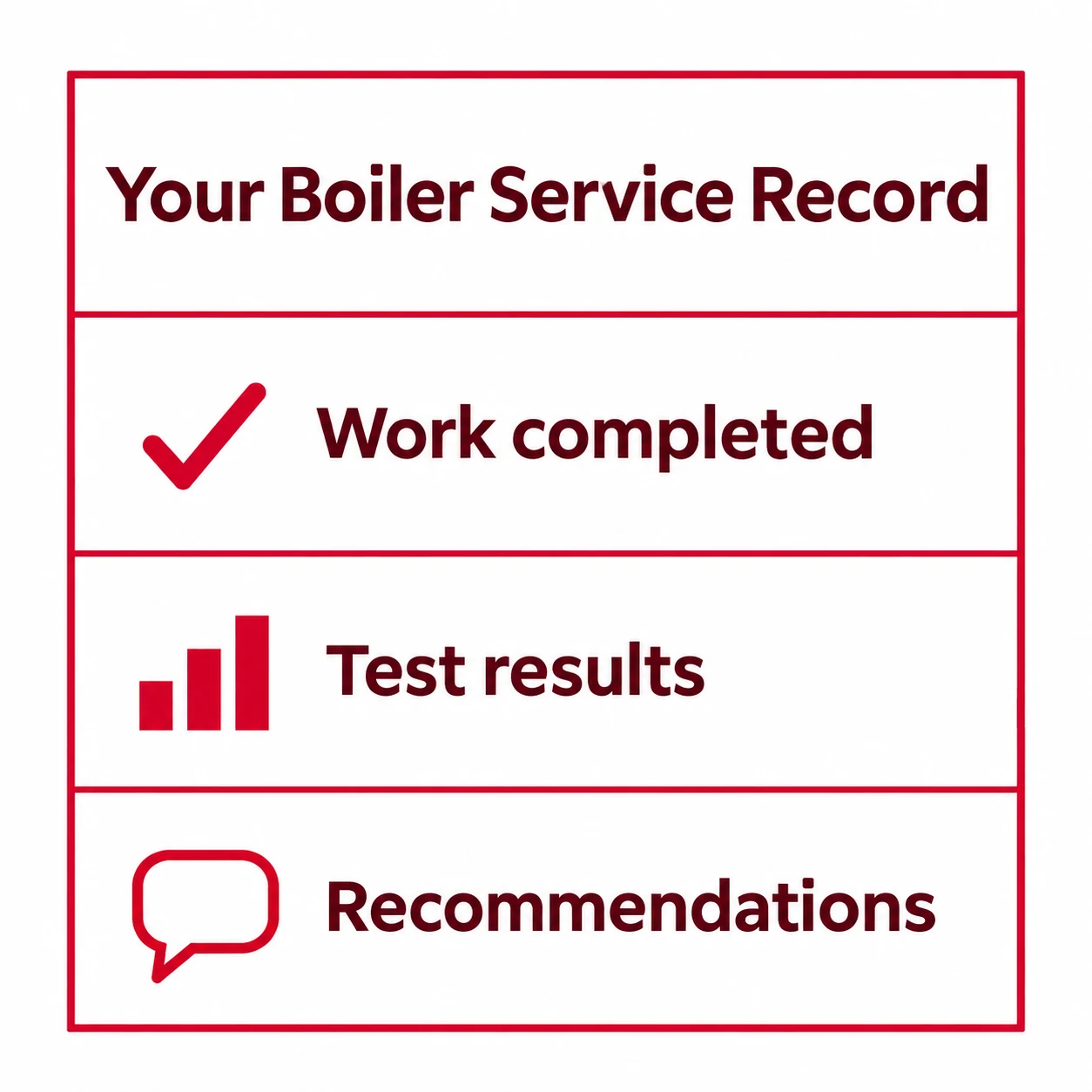
At the end of the visit, you should understand what was checked, what was cleaned or replaced, and whether anything needs further attention. A useful service record identifies the appliance, records relevant test results and notes defects or recommendations.
Ask for clarification if a recommendation is unfamiliar. Some findings concern routine maintenance, while others may require prompt action or mean the boiler must remain out of use until made safe. The engineer should explain the difference clearly.
An oil boiler service does not automatically include servicing every part of the heating system. Radiator balancing, extensive fault finding and power flushing are separate tasks unless agreed. Our guide to what a full central heating service should check explains the wider system checks.
Keep the service record with your appliance documents and follow the recommended maintenance interval. Regular servicing helps identify developing problems and maintain reliable operation, although it cannot prevent every future fault.
- Expect cleaning, component inspections and measured combustion checks, not just a visual inspection.
- Oil supply, flue condition and ventilation all contribute to reliable operation.
- The manufacturer’s instructions determine the detailed service requirements.
- Keep a clear record of test results, replaced parts and recommendations.
Frequently asked questions
How often should an oil boiler be serviced?
Oil boilers generally need servicing annually. Follow the manufacturer’s instructions and any warranty conditions, as some appliances or operating conditions may require more frequent attention. Arrange help sooner if performance changes.
Who should service an oil boiler?
Choose an engineer with appropriate oil appliance training and competence. OFTEC registration is a useful way to check relevant credentials. Ask whether the engineer has experience with your particular boiler and burner.
Does a service include replacement parts?
Routine service items and additional replacement parts may be handled differently. Ask what is included when booking. If inspection reveals worn or damaged components, the engineer should explain the recommended work and obtain your agreement before proceeding.
Should I wait for the annual service if the boiler keeps locking out?
No. Repeated lockouts need investigation rather than repeated resets. Follow the appliance instructions and contact a competent engineer. Tell them about any smoke, unusual smells or ignition noises so they can advise you appropriately.
Keep your oil boiler working reliably
If your boiler is due for attention, speak to Multi Fuel Cooking about professional oil boiler servicing. We can discuss your appliance and help you arrange its next service.