A boiler service is often booked to check safety, efficiency and reliability. Sometimes, though, the visit also reveals signs that the wider heating system is not circulating as cleanly as it should.
Radiator sludge is one of the common reasons. It can build quietly inside pipework and radiators, then show itself through cold spots, noisy operation, slow heat up times or strain on the boiler.
What radiator sludge is
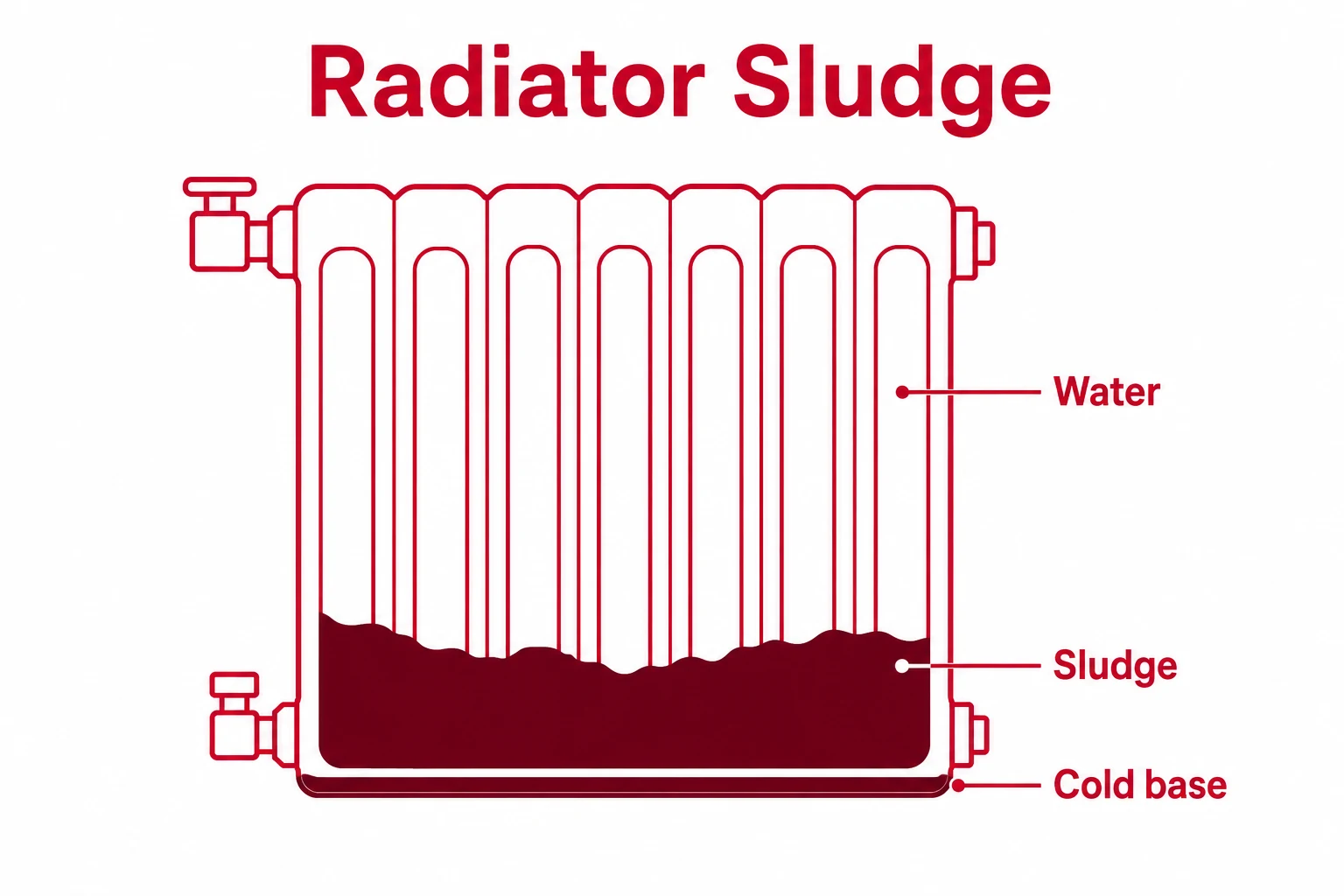
Radiator sludge is a dark mixture of water, rust, scale and fine metal particles that collects inside a wet central heating system. It usually forms when oxygen enters the system and reacts with steel radiators or other metal components. Over time, those particles settle in radiators, valves, pumps and pipework.
The lower parts of radiators are a common place for sludge to gather because heavier debris sinks and restricts the flow of hot water. That is why a radiator can feel warm at the top but cool at the bottom, even when the boiler is working.
Sludge is not always obvious from day to day. A heating system can still produce heat while circulation is gradually getting worse. The issue is that the boiler, pump and controls may have to work harder to move water around the system, which can affect comfort and reliability.
Why a boiler service can reveal circulation problems
A boiler service is focused on the appliance, but the engineer is also seeing how the boiler behaves as part of the heating system. If heat is not moving away from the boiler properly, or if the system response seems uneven, it can point towards circulation restrictions.
During servicing, an engineer may notice unusual noises, slow temperature changes, poor radiator performance, dirty system water or signs that key components have been under extra strain. These clues do not automatically mean the whole system needs flushing, but they do suggest that the water quality and circulation deserve attention.
This is where servicing becomes useful beyond a basic annual check. A well carried out visit can flag early symptoms before they turn into repeated callouts or avoidable component problems. Multi Fuel Cooking has a helpful overview of what a full central heating service should check if you want to understand the wider inspection process.
For oil appliances, clean circulation still matters because the boiler relies on heat being carried away through the system. If you have an oil fired appliance, regular oil boiler servicing can help identify appliance issues as well as symptoms linked to the system around it.
Signs that sludge may be affecting your radiators
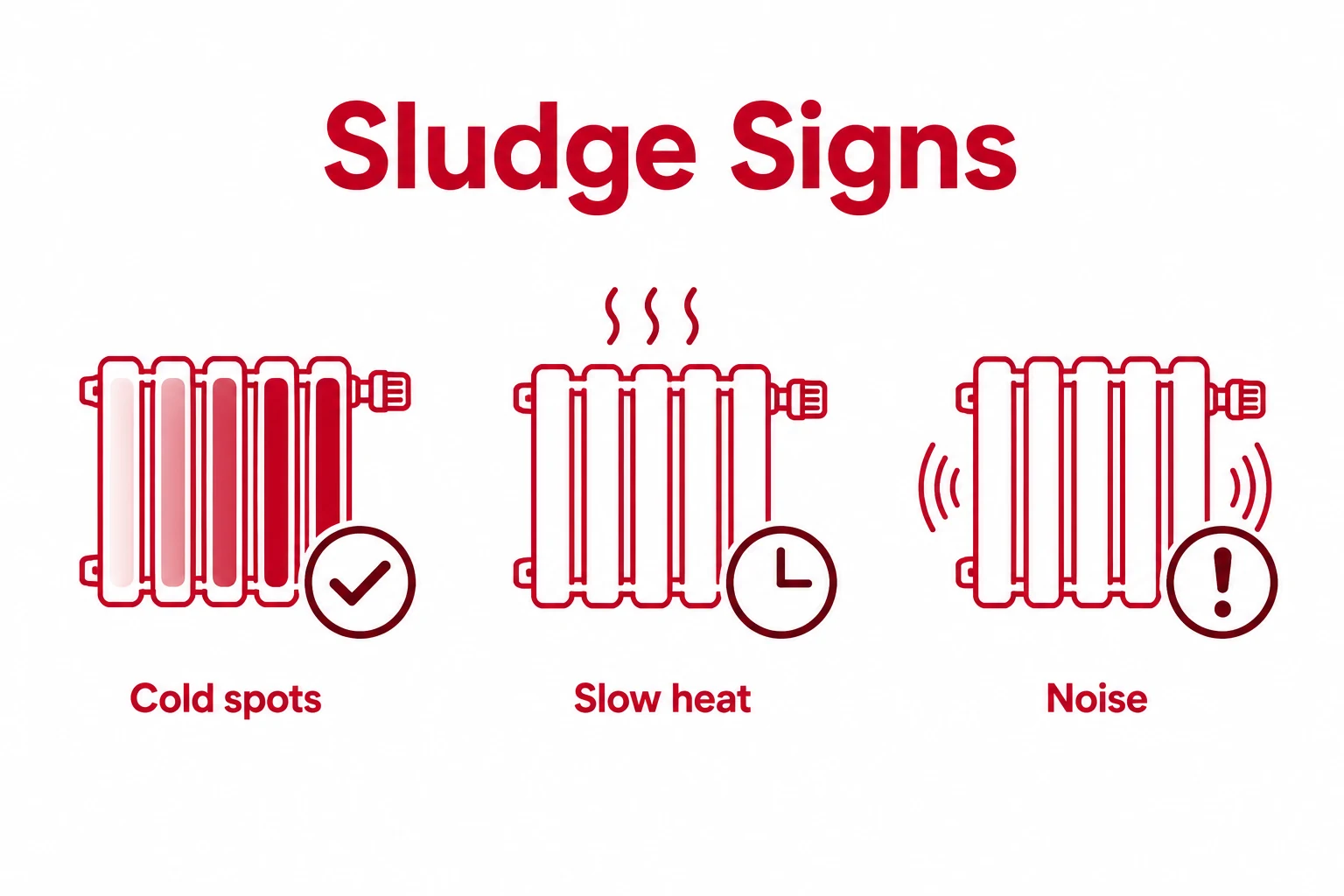
Several symptoms can suggest that sludge is restricting the system. One radiator may stay cooler than others, or a room may take much longer to warm up even when the thermostat is calling for heat. You may also feel cold areas across the bottom of radiators, which often points towards settled debris.
Noises can also be a clue. Gurgling, knocking or rushing sounds may have several causes, including trapped air, pump issues or poor circulation. The important point is not to guess. A heating engineer can assess whether the symptom is caused by air, balancing, a faulty part, a control issue or dirty water.
Other signs include radiators needing frequent bleeding, discoloured water from radiator vents, a pump that sounds strained, or a boiler that cycles on and off more than expected. None of these signs should be treated as a diagnosis on their own. Together, they help build a picture of system condition.
If your service engineer mentions sludge, ask what they observed. A good explanation should connect the recommendation to specific evidence, such as cold spots, poor flow, dirty water or related system behaviour.
Why sludge matters for the boiler as well as the radiators
It is easy to think of radiator sludge as a radiator problem, but it can affect the whole heating circuit. When water cannot move freely, heat transfer becomes less consistent. The boiler may reach temperature quickly, shut down, then restart because the heat is not being distributed as intended.
Dirty water can also contribute to wear on pumps, valves and heat exchangers. Modern boilers are designed to work with controlled flow and clean system water. If debris is allowed to circulate, small waterways and sensitive parts can become more vulnerable to blockage or strain.
That does not mean every noisy radiator needs major work. Many heating issues are simple to resolve with bleeding, balancing, replacing a valve or adjusting controls. The reason sludge matters is that it can sit behind repeated symptoms. If the same circulation problems keep returning, cleaning the system properly may be the more sensible answer.
For homeowners comparing maintenance options, a broader heating systems service can be useful when the issue seems to involve radiators, pipework and controls rather than the boiler alone.
When flushing becomes the right recommendation
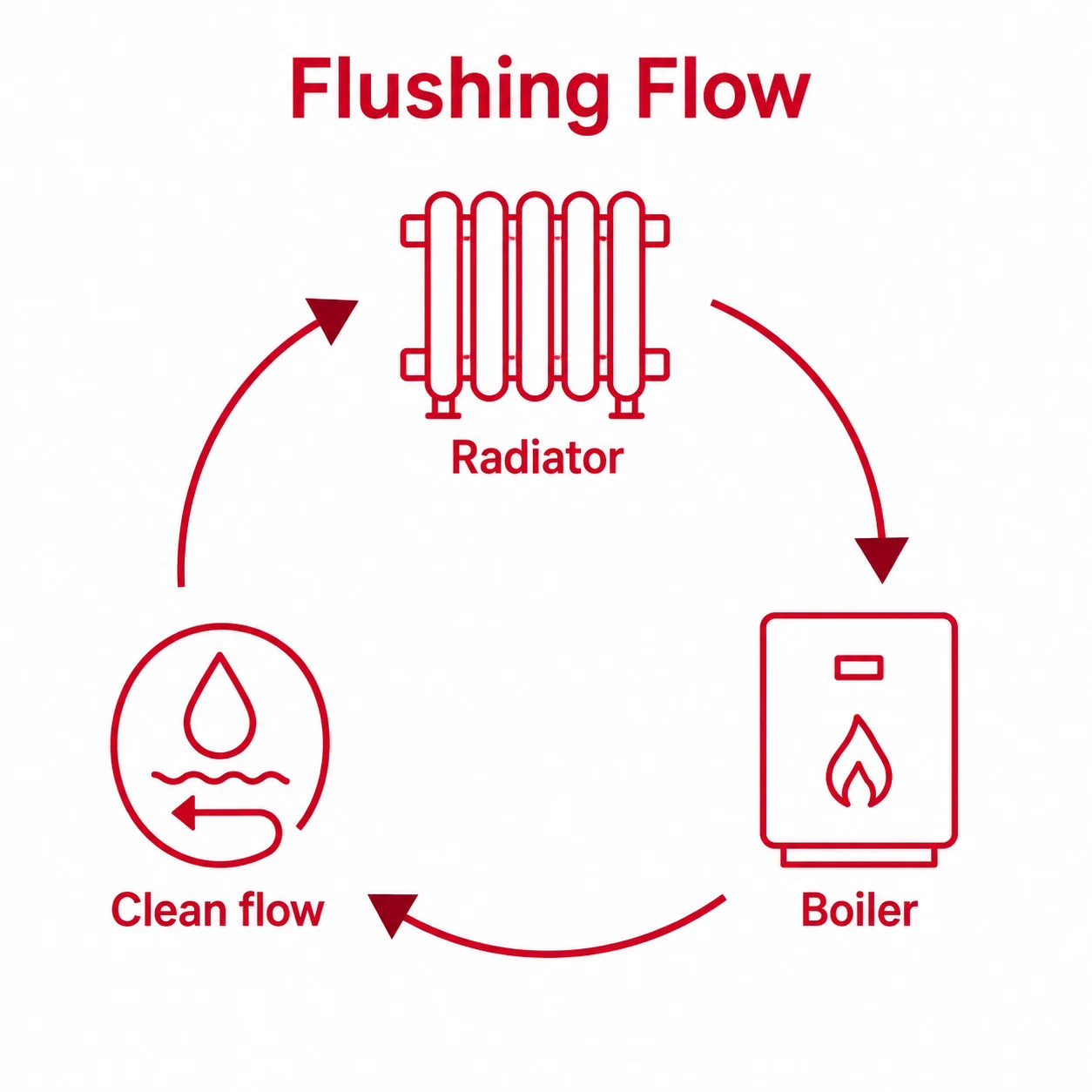
Power flushing is a professional cleaning process used to clear sludge, rust and debris from a central heating system. It is not recommended just because a system is old. It is recommended when the evidence suggests that water quality and circulation are causing real performance problems.
A service may flag the need for flushing if radiators have persistent cold spots, system water is visibly dirty, circulation is poor, or the boiler is showing symptoms linked to restricted flow. In these cases, flushing can help restore cleaner movement through radiators and pipework.
The exact approach depends on the condition and layout of the system. An engineer may also discuss inhibitor, magnetic filters and follow up checks, because keeping the water clean after the work is just as important as removing the debris in the first place.
If you are at the point where dirty water or sludge has been identified, Multi Fuel Cooking explains the professional process on its power flushing service page. For more detail on timing, there is also a separate guide to when to arrange a power flush for your central heating system.
What to ask after sludge is mentioned during a service
If sludge is flagged during a boiler service, you do not need to make a rushed decision. Start by asking what signs were found and whether the engineer believes the issue is isolated or system wide. That helps separate one faulty radiator valve from a wider circulation problem.
Ask whether the system water has been checked, whether radiators have clear cold spots and whether the pump or boiler behaviour suggests restricted flow. You can also ask if any immediate maintenance is needed before flushing is considered.
It is also worth asking how the system will be protected afterwards. Clean water, suitable inhibitor and good filtration can all help reduce future build up. The goal is not simply to clear sludge once, but to support a cleaner and more reliable heating system.
A boiler service that flags sludge is not bad news. It is useful information. It gives you the chance to deal with circulation problems before they undermine comfort or put unnecessary pressure on the boiler.
- Radiator sludge is usually caused by corrosion debris collecting in radiators and pipework.
- A boiler service can reveal sludge through poor circulation, dirty water, noises or uneven heating.
- Cold areas at the bottom of radiators are a common sign, but a proper diagnosis still matters.
- Power flushing is most useful when there is clear evidence that debris is restricting system flow.
- After cleaning, inhibitor and filtration help keep the system in better condition.
Frequently asked questions
Can a boiler service remove radiator sludge?
A standard boiler service does not usually remove sludge from the whole heating system. It may identify signs of dirty water or poor circulation, which can then lead to a recommendation for professional flushing or other system maintenance.
Does sludge always mean I need a power flush?
No. The right answer depends on the evidence. Some problems are caused by air, balancing, valves or controls. Flushing is normally considered when debris and restricted circulation are clearly affecting the system.
Why are my radiators hot at the top and cold at the bottom?
That pattern can happen when sludge settles in the lower part of a radiator and stops hot water moving through it properly. An engineer can confirm whether sludge is the cause or whether another circulation issue is involved.
Will servicing my boiler help prevent sludge?
Servicing helps monitor how the boiler is working and can flag symptoms early. Preventing sludge also depends on good system water quality, inhibitor, filtration where appropriate and proper heating system maintenance.
Get clear advice on your heating system
If a service has raised concerns about sludge or poor circulation, Multi Fuel Cooking can assess the system properly and explain the most sensible next step.