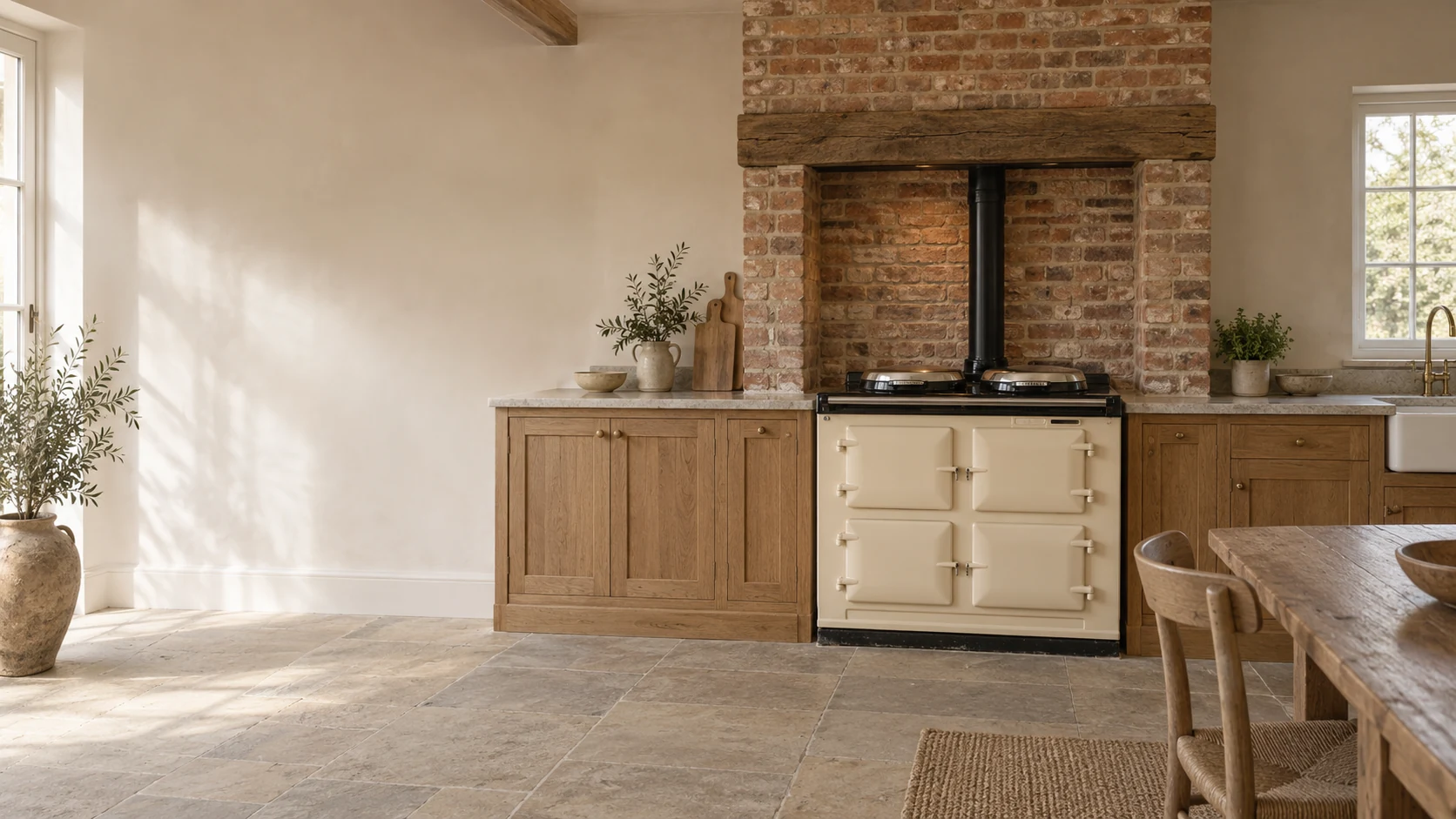
An AGA’s position can shape the whole kitchen, from where you prepare meals to how cupboards and worktops fit together. For a model that needs a flue, the route for combustion gases deserves just as much attention as the cooker’s dimensions.
The best starting point is to consider the cooker, flue and room together. Understanding how they interact helps you choose a practical position, protect reliable performance and plan cabinetry with confidence before the kitchen design is finalised.
Start with the exact AGA model
Not every AGA needs the same flue arrangement. Before planning a chimney connection or an opening through a wall, establish the model, fuel and installation requirements. A cooker’s appearance alone will not tell you which arrangement it needs.
Depending on the model, you may encounter:
- A conventional flue: combustion gases leave through a flue or chimney, with natural draught helping them rise.
- A balanced flue: an approved system brings combustion air from outside and discharges combustion gases outside.
- A powered flue: a fan assists discharge through a route permitted by the manufacturer.
- An electric AGA: there are no combustion gases from burning fuel, although cooking ventilation requirements still need checking.
These are not interchangeable options for every cooker. A powered system, for example, cannot simply be added to make an unsuitable route work unless the appliance manufacturer approves that arrangement.
A specialist assessment for AGA flue installation should therefore begin with the appliance details and its instructions. If you are considering a previously owned cooker, obtain its model information before committing to a kitchen position.
How the flue route influences draught
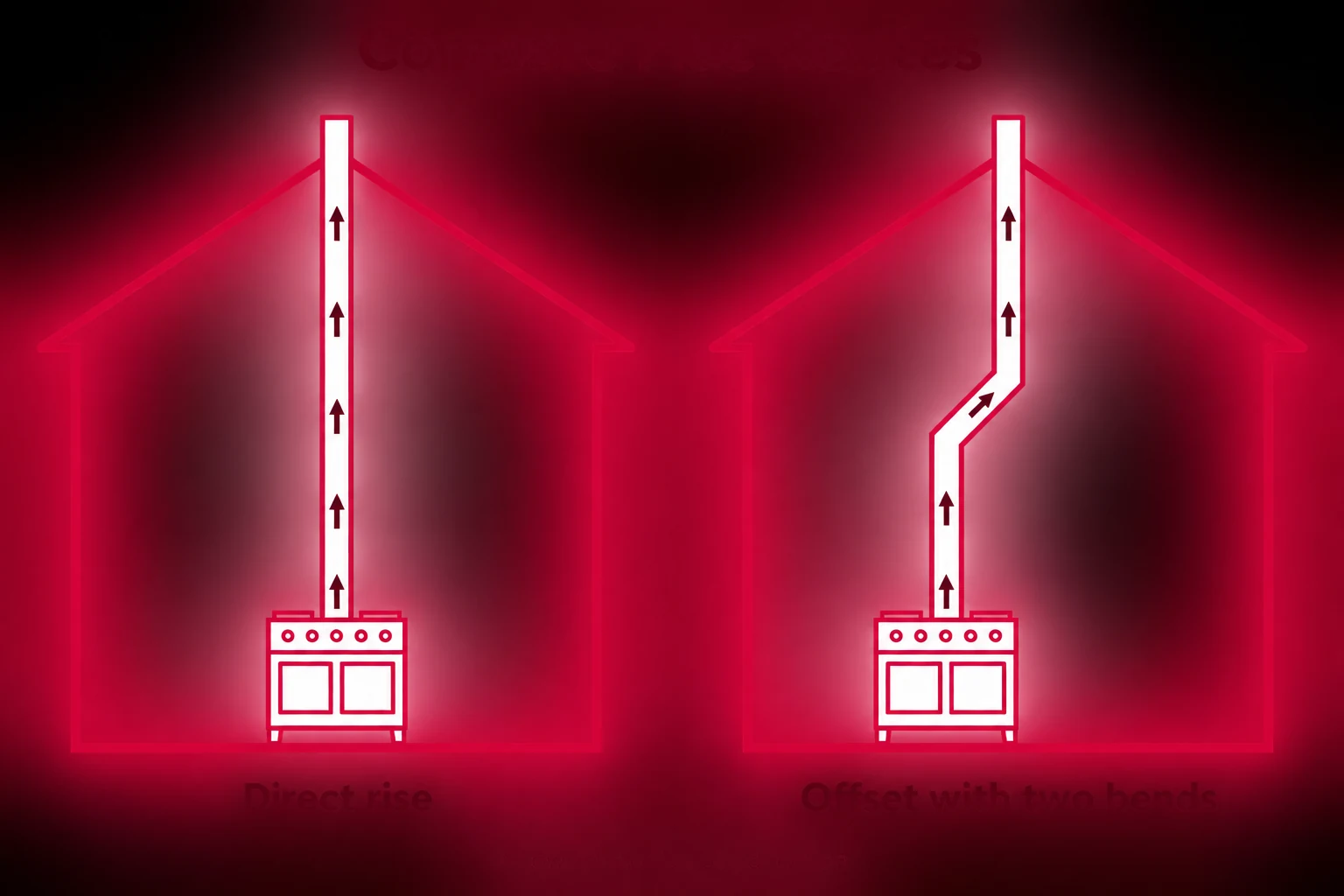
In a conventional flue, warm combustion gases rise because they are less dense than the cooler surrounding air. This creates draught, helping draw gases away from the cooker. Reliable operation depends on the draught being appropriate for that particular appliance, rather than simply as strong as possible.
A reasonably direct vertical route generally supports natural draught. Bends and changes of direction introduce resistance, while long exposed sections can allow gases to cool. Cooling can weaken the draught and, in unsuitable conditions, contribute to condensation within the flue.
Flue diameter also matters. Bigger is not automatically better, and reducing the diameter to fit a narrow space is not a safe design shortcut. The flue must suit the appliance and follow the relevant installation requirements.
There is no universal number of bends or overall height that works for every AGA. An installer needs to assess the complete route, including its effective height, offsets, insulation and terminal. Where required, draught measurements and commissioning checks confirm that the finished installation operates within the appliance’s specified limits.
Choose the route before fixing the kitchen layout
An existing chimney can provide a useful route, but its presence does not automatically make it suitable. Its condition, dimensions, previous use and any existing liner need checking. A fireplace opening also tells you little about hidden offsets or the condition of the chimney above.
Where a liner is needed, it must be suitable for the appliance, fuel and operating conditions. Understanding the role of flue lining is particularly helpful when incorporating an older chimney into a new kitchen plan. A liner is part of a complete system, not a substitute for assessing the chimney itself.
If there is no suitable chimney, an approved flue system may offer another route. The installer will need to consider floors, roof structure, supports and safe clearances from combustible materials. Not every proposed cooker position will suit every flue system.
Ask for the intended route to be agreed before ordering cabinetry. This helps establish:
- Where the flue leaves the cooker and enters a wall, ceiling or chimney.
- Whether boxing or an accessible enclosure is appropriate.
- What space must remain available for inspection, cleaning and servicing.
- How nearby cupboards, shelves and worktops can meet the appliance’s clearance requirements.
Why the terminal position matters
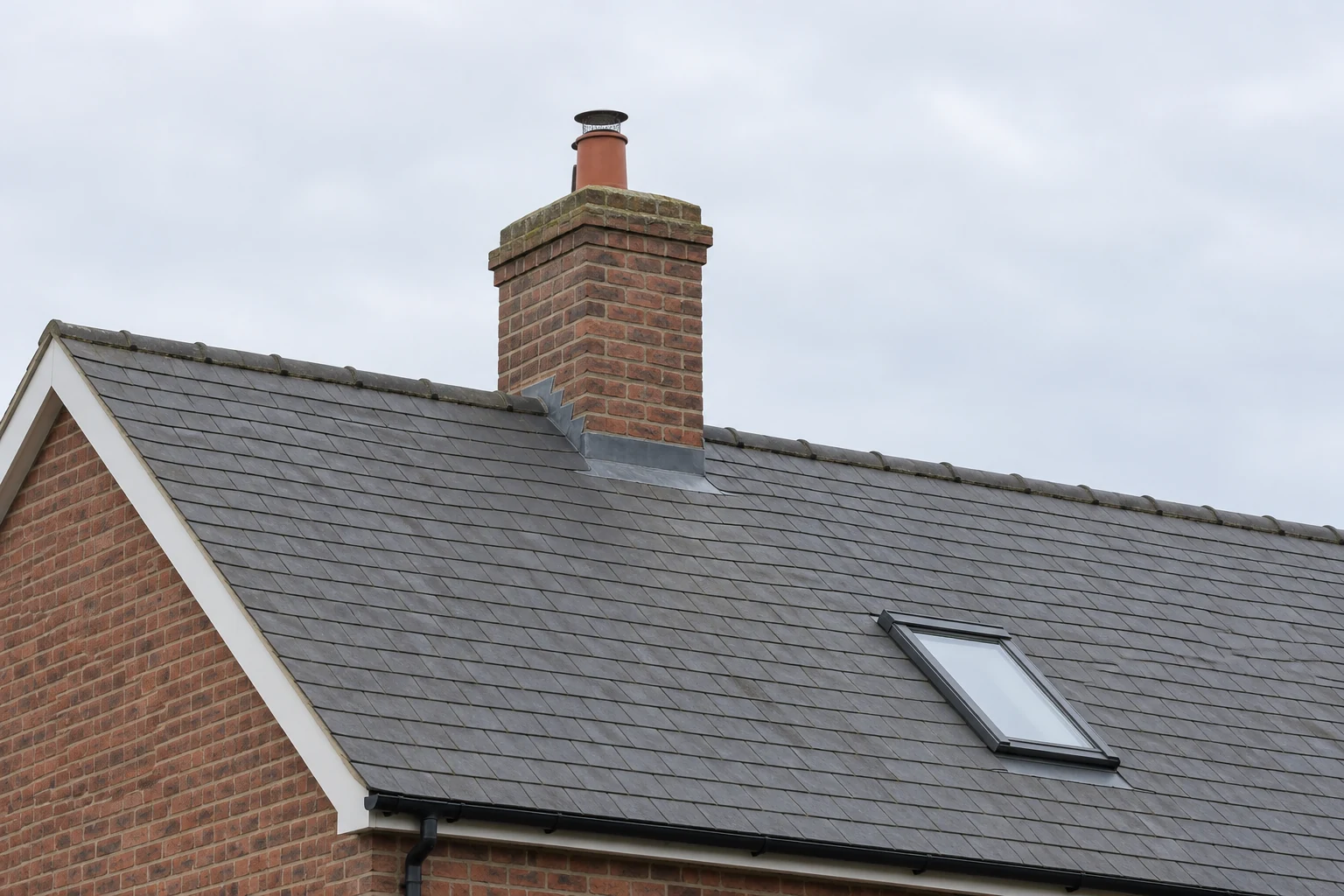
The terminal is where combustion gases leave the flue. Its position affects how safely those gases disperse and, for a conventional system, how wind conditions influence draught. A route that fits neatly inside the kitchen still needs a suitable endpoint outside.
For a chimney termination, the surrounding roof shape and nearby obstructions matter. Wind moving over a roof or around a taller structure can create pressure changes and turbulence. The installer must consider these influences rather than judging the terminal solely by its height above the cooker.
Wall terminals for suitable appliances have their own positioning requirements. Windows, doors, ventilation openings, boundaries and other nearby features can affect where a terminal is permitted. An apparently convenient external wall is therefore only a starting point for assessment.
A cowl is not a universal cure for poor draught. Any terminal or accessory must be compatible with the appliance and flue system. Choosing the right termination from the outset is more dependable than treating an unsuitable route as something an accessory will resolve later.
Plan ventilation, extraction and access together
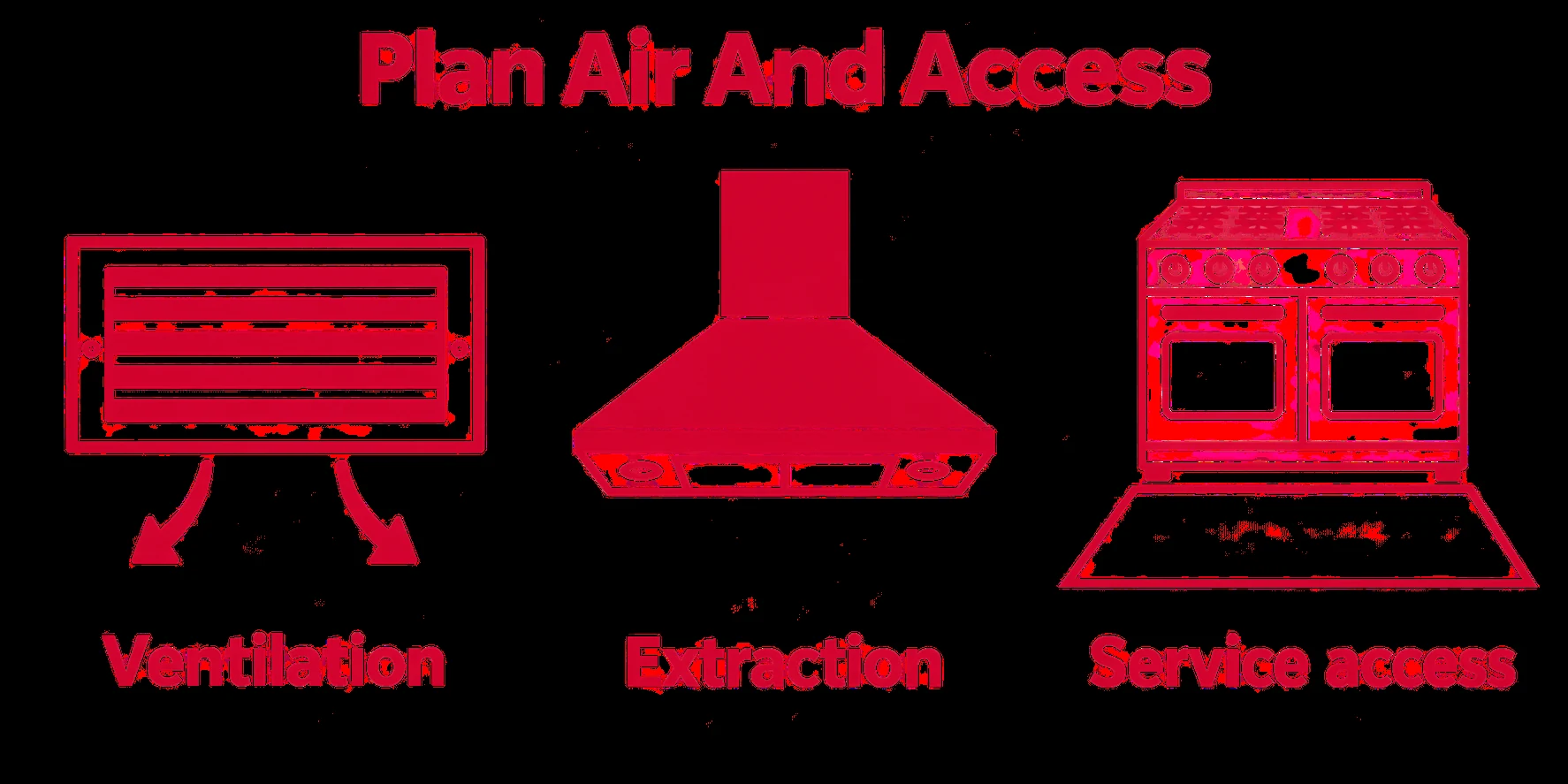
The kitchen itself can influence flue performance. An appliance that draws combustion air from the room needs an adequate air supply. Permanent ventilation, where required, must be sized and positioned correctly and must not be covered by cupboards or blocked to reduce a draught.
A powerful cooker hood or another extract fan can reduce pressure indoors. With an appliance that relies on room air and natural draught, this may interfere with the safe removal of combustion gases. Tell your installer about existing fans and any extraction you intend to add, including systems serving adjacent rooms.
The appropriate assessment should consider how the appliance and fans operate together. A recirculating hood behaves differently from one that discharges outside, but it does not provide combustion air or replace required ventilation.
Keep service access in the kitchen plan too. Decorative surrounds should not prevent inspection of necessary connections or access to cleaning points. Before handover, ask how the system has been commissioned, which vents must remain clear and what maintenance is needed. A suitable carbon monoxide alarm provides an important additional safeguard where required, but never replaces correct installation, ventilation or servicing.
- Confirm the exact AGA model before choosing a flue route.
- Natural draught depends on the complete flue system, not height alone.
- Agree the route and terminal position before finalising cabinetry.
- Plan combustion air, kitchen extraction and maintenance access together.
Frequently asked questions
Can an AGA sit on an internal wall?
Potentially, yes. The exact appliance must have a suitable, approved flue route from that position. An internal wall does not automatically rule it out, but the route through the building needs assessing before the kitchen layout is agreed.
Can I move an AGA and keep using the same chimney?
Sometimes, provided the chimney remains suitable and the new connection meets the appliance requirements. Moving the cooker can introduce extra bends or change the effective route, so the existing arrangement should not simply be extended without assessment.
Does an electric AGA need a chimney?
An electric AGA does not need a combustion flue because it does not burn fuel. Cooking vapour and odour ventilation arrangements vary by model, so check the installation instructions before assuming that no ventilation connection is needed.
Should the flue be checked after fitting a new extractor?
Tell a qualified installer before adding or upgrading extraction near an AGA that burns fuel. A change in airflow can affect some installations, and checks may be needed to confirm that the cooker and extraction operate safely together.
Plan your AGA position with confidence
If you are choosing an AGA or updating your kitchen, Multi Fuel Cooking can help assess the flue route alongside your layout. Bring your model details and kitchen plans so we can discuss a suitable arrangement.